
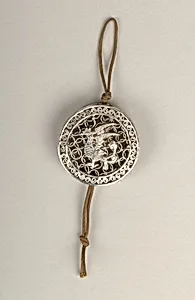
은세공 봉황 무늬 향낭 조선|銀掐絲 鳳凰文 香囊 朝鮮|Filigree scent box
Unknown Artist
19th century
Medium
Silver
Dimensions
Diam. 1 3/8 in. (3.5 cm)
Classification
Metalwork
Culture & Period
Korea · Joseon dynasty (1392–1910)
Department
Asian Art
Museum
Metropolitan Museum of Art, New York, NY
Credit
Rogers Fund, 1922
Accession Number
22.141.29
Rights
Public Domain
Tags
Art Historical Context
This exquisite silver filigree scent box crafted in 19th-century Korea during the Joseon dynasty (2–1910), the refined metalwork traditions of the era. Measuring just 1 3/8 inches (3.5 cm) in diameter, it served as a personal accessory, likely holding fragrant incense or perfume sachets. The intricate filigree technique—twisting and soldering fine silver wires into delicate patterns—creates a lightweight, ornate surface, showcasing the artisan's mastery of precision and elegance in a compact form. At its heart is the phoenix motif, a symbol in Korean culture drawn from East Asian mythology. Representing harmony, prosperity, and feminine grace, the phoenix often adorned objects associated with nobility or women, evoking wishes for good fortune. During the Joseon period, under strict Confucian ideals, such luxury items blended everyday utility with symbolic artistry, reflecting societal values of beauty and moral virtue. Acquired through the Rogers Fund in 1922 and now in the Metropolitan Museum of Art's Asian Art collection, this rare metalwork piece highlights Korea's understated opulence. Its survival offers a glimpse into Joseon craftsmanship, where silver filigree elevated humble scents into treasures of cultural significance.