
Finger ring
Unknown Artist
1796–1875
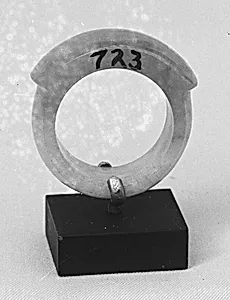
Medium
Jadeite, light emerald green and white
Dimensions
H. 1 in. (2.5 cm); W. 3/8 in. (1 cm)
Classification
Jade
Culture & Period
China · Qing dynasty (1644–1911)
Department
Asian Art
Museum
Metropolitan Museum of Art, New York, NY
Credit
Gift of Heber R. Bishop, 1902
Accession Number
02.18.723
Rights
Public Domain
Art Historical Context
This delicate finger ring, crafted from light emerald green and white jadeite during China's Qing dynasty (1644–1911), dates to between 1796 and 1875. Measuring just 1 inch high and 3/8 inch wide, its petite form belies the material's luxurious appeal. Jadeite, a vivid variety of jade rarer and more translucent than the more common nephrite, was highly prized in imperial China for jewelry, symbolizing purity, immortality, and moral virtue. In Qing-era culture, such rings were worn by both men and women as status symbols, often gifted among elites or used in courtly exchanges. The stone's natural bicolor mottling—emerald green veined with white—highlights the artisan's skill in selecting and polishing flawless material, a testament to the period's refined lapidary techniques. Though the maker remains unknown, this piece reflects the dynasty's peak in jade craftsmanship, blending natural beauty with subtle elegance. A gift to the Metropolitan Museum of Art from Heber R. Bishop in 1902, it invites us to imagine a hand adorned in 19th-century Beijing, connecting visitors to the enduring allure of Chinese jade artistry.