
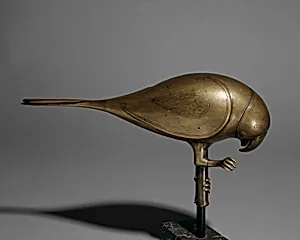
Finial in the Form of a Parrot
Unknown Artist
17th–18th century
Medium
Brass
Dimensions
H. 5 3/4 in. (14.6 cm) L. 11 in. (27.9 cm)
Classification
Metal
Department
Islamic Art
Museum
Metropolitan Museum of Art, New York, NY
Credit
Gift of Robert W. and Lockwood De Forest, 1919
Accession Number
19.135.3
Rights
Public Domain
Tags
Art Historical Context
This exquisite **Finial in the Form of a Parrot**, in brass during the 17th–18th century, exemplifies the masterful metalworking traditions of Islamic art. Standing 5 3/4 inches high and 11 inches, this dynamic sculpture likely adorned the top of a staff, tent pole, or architectural element, serving both functional and decorative purposes. The unknown artist's skillful rendering captures the parrot's vibrant feathers, curved beak, and alert posture, transforming everyday brass into a lively emblem of nature's exotic beauty. In Islamic culture, parrots held symbolic importance, often representing eloquence, wisdom, and the wonders of the natural world—qualities echoed in Persian and Mughal poetry and miniatures. Brass, a durable and malleable alloy, was a favored medium for such objects, allowing intricate chasing, hammering, or casting techniques that highlighted the artisan's precision. Produced during a golden age of cross-cultural exchange along trade routes, this finial reflects the era's fascination with avian motifs, blending utility with artistic flair. A generous gift to the Metropolitan Museum of Art from Robert W. and Lockwood de Forest in 1919, it invites visitors to appreciate the ingenuity of Islamic craftsmen and the enduring allure of these feathered messengers.