
Fireback
Unknown Artist
ca. 1758
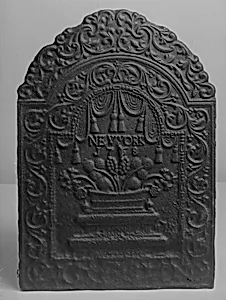
Medium
Iron
Dimensions
27 1/2 x 19 1/4 in. (69.9 x 48.9 cm)
Classification
Fireback
Culture
American
Department
The American Wing
Museum
Metropolitan Museum of Art, New York, NY
Credit
Anonymous Gift, 1944
Accession Number
44.126
Rights
Public Domain
Art Historical Context
Nestled in The American Wing of the Metropolitan Museum of Art, this iron fireback from around 1758 exemplifies everyday artistry in colonial America. Crafted by an unknown artisan, it measures 27½ x 19¼ inches, designed to line the back of a fireplace hearth. Firebacks like this were essential household items, cast in iron to radiate heat more efficiently while shielding masonry from intense flames—a practical innovation born from the necessities of 18th-century living. Historically, these objects bridged European traditions and emerging American craftsmanship. By the mid-1700s, local foundries in places like Pennsylvania and New Jersey began producing firebacks, often replicating popular motifs from English or Dutch designs such as biblical scenes, coats of arms, or pastoral landscapes. This anonymous example reflects the era's blend of functionality and subtle decoration, serving as both a heat reflector and a statement of refined domestic taste amid the colonies' growing prosperity. Its enduring appeal lies in the lost-wax or sand-casting techniques used to create intricate reliefs on durable iron, a medium prized for its longevity. Donated anonymously in 1944, this fireback invites visitors to imagine cozy colonial hearths, where firelight danced across its surface, warming homes and hearts in pre-industrial America.