
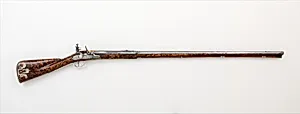
Flintlock Sporting Gun of Empress Margarita Teresa of Spain (1651–1673)
ca. 1670–73
Medium
Steel, wood (burl walnut), silver, copper alloy, gold
Dimensions
L. 52 1/8 in. (132.4 cm); L. of barrel 38 3/8 in. (97.5 cm)
Classification
Firearms-Guns-Flintlock
Culture
Austrian, Vienna
Department
Arms and Armor
Museum
Metropolitan Museum of Art, New York, NY
Credit
Purchase, Arthur Ochs Sulzberger and Irene Roosevelt Aitken Gifts, 2011
Accession Number
2011.354
Rights
Public Domain
Art Historical Context
This exquisite flintlock sporting gun, around 1670–73 by the Viennese gunsmith Jacques Lamarre, once belonged to Empress Margarita Teresa Spain (1651–1673), the young consort of Holy Roman Emperor Leopold I. Produced in Vienna during the Baroque era, it exemplifies the opulent fusion of functionality and artistry in Habsburg court culture. At over 52 inches long, a 38-inch barrel, this was designed for aristocratic hunting pursuits, blending advanced engineering with lavish decoration befitting an empress. The gun's construction highlights masterful techniques: a steel barrel and lock mechanism for reliable flintlock ignition—a cutting-edge ignition system of the late 17th century—paired with a burl walnut stock for ergonomic grace and visual warmth. Inlays of silver, copper alloy, and gold add regal splendor, likely featuring intricate engravings or damascening that celebrated imperial prestige. Such pieces were status symbols, transforming weapons into wearable art for Europe's elite. Housed in the Metropolitan Museum of Art's Arms and Armor Department (acquired in 2011), this gun offers a window into the grandeur of absolutist courts, where even sporting tools embodied power, craftsmanship, and the thrill of the hunt. A true marvel of Viennese metalwork!