
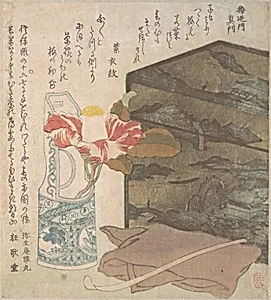
Flower Vase and Lacquer Box
18th–19th century
Medium
Woodblock print (surimono); ink and color on paper
Dimensions
7 15/16 x 7 1/8 in. (20.2 x 18.1 cm)
Classification
Prints
Culture & Period
Japan · Edo period (1615–1868)
Department
Asian Art
Museum
Metropolitan Museum of Art, New York, NY
Credit
H. O. Havemeyer Collection, Bequest of Mrs. H. O. Havemeyer, 1929
Accession Number
JP2218
Rights
Public Domain
Tags
Art Historical Context
This delicate woodblock print, titledFlower Vase and Lac Box*, captures the quiet elegance of everyday objects in Edo-period Japan (1615–1868). Created by an unidentified artist in the 18–19th century, showcases a flower vase brimming with seasonal blooms alongside a finely crafted lacquer box—symbols of refined taste and domestic harmony. Measuring just 7 15/16 x 7 1/8 inches, its intimate scale invites close contemplation, much like a personal gift or seasonal greeting. As a *surimono*, this represents a luxurious subset of Japanese woodblock printing, commissioned for private occasions such as New Year's celebrations or poetry gatherings. Artisans applied ink and vibrant colors on paper with meticulous techniques, often incorporating subtle embossing or mica for a shimmering effect that enhanced the naturalistic flowers and glossy lacquer textures. These prints celebrated *iki*—a stylish understatement—reflecting the prosperous merchant culture of urban Edo (modern Tokyo). Part of the Metropolitan Museum of Art's H. O. Havemeyer Collection (bequest of Mrs. H. O. Havemeyer, 1929), this work highlights Japan's mastery of printmaking, bridging ukiyo-e's "floating world" with personal artistry. Visitors will appreciate its timeless beauty, evoking the serene aesthetics of a bygone era.