
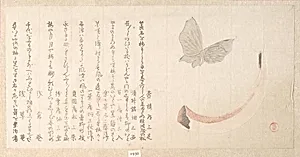
Flower-Vase of Horn and a Butterfly
19th century
Medium
Woodblock print (surimono); ink and color on paper
Dimensions
5 3/8 x 10 11/16 in. (13.7 x 27.1 cm)
Classification
Prints
Culture & Period
Japan · Edo period (1615–1868)
Department
Asian Art
Museum
Metropolitan Museum of Art, New York, NY
Credit
H. O. Havemeyer Collection, Bequest of Mrs. H. O. Havemeyer, 1929
Accession Number
JP1930
Rights
Public Domain
Tags
Art Historical Context
**Flower-Vase of Horn and Butterfly** is a delicate woodblock print (surono) by Kuboman, a versatile Edo-period artist, poet, and printmaker active in early 19th-century Japan Created during the Edo period (1615–8), this intimate work measures just 5 3/8 x 10 11/16 inches, showcasing a fanciful flower vase crafted from horn adorned with a graceful butterfly. Shunman's ukiyo-e style blends precise lines, vibrant inks, and colors on paper, capturing nature's ephemeral beauty in a compact format perfect for personal appreciation. Surimono like this were luxury commissions, often produced for New Year's poetry gatherings or private patrons, featuring embossed effects, metallic pigments, and subtle gauffrage for tactile elegance. Unlike mass-produced ukiyo-e, they emphasized poetic refinement and exclusivity, reflecting Japan's thriving urban culture and literati circles. The horn vase—a rare, exotic motif—evokes ingenuity and natural harmony, with the butterfly symbolizing transformation and the fleeting seasons in Japanese aesthetics. Part of the Metropolitan Museum of Art's H. O. Havemeyer Collection (bequest 1929), this print highlights the global fascination with Japanese art during the late 19th century. Visitors will delight in its whimsical yet profound celebration of craftsmanship and impermanence.
About the Artist
Kubo Shunman · 1757–1820
Japanese, 1757–1820