
Folio from a Qur'an Manuscript
Unknown Artist
late 13th–early 14th century
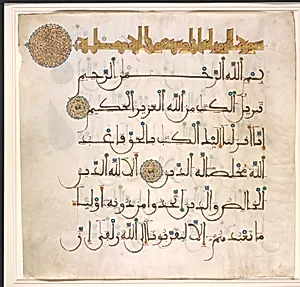
Medium
Ink, opaque watercolor, and gold on parchment
Dimensions
H. 21 1/16 in. (53.5 cm) W. 22 in. (55.9 cm)
Classification
Codices
Department
Islamic Art
Museum
Metropolitan Museum of Art, New York, NY
Credit
Rogers Fund, 1942
Accession Number
42.63
Rights
Public Domain
Tags
Art Historical Context
This striking folio comes from a Qur'an manuscript created in the late 13th or early 14th century, a period when Islamic book arts flourished across the Middle East and Central Asia. Written on parchment—a material prized for its durability—the page measures over 21 inches tall, suggesting it belonged to a large, prestigious volume likely commissioned for a mosque or royal library. The use of ink, opaque watercolor, and gold highlights the sacred text while transforming the manuscript into a work of art. Calligraphy stands at the heart of this piece, reflecting the deep reverence Islamic culture holds for the written word of the Qur'an. Gold illumination not only beautifies the page but also symbolizes divine light, drawing the reader's eye to verses of spiritual importance. Such luxurious materials indicate patronage by wealthy individuals or institutions who valued both devotion and aesthetic excellence. Today housed in the Metropolitan Museum of Art's Islamic Art department, this folio offers visitors a window into centuries-old traditions of craftsmanship. Its elegant script and decorative details remind us how every element—from letter forms to gilded accents—served to honor the holy text and inspire contemplation.