
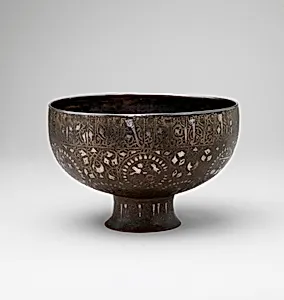
Footed Bowl
Unknown Artist
early 13th century
Medium
Bronze; inlaid with silver and black compound
Dimensions
H. 4 3/8 in. (11.1 cm) Diam. 6 15/16 in. (17.6 cm) Wt. 26.3 oz. (745.7 g)
Classification
Metal
Department
Islamic Art
Museum
Metropolitan Museum of Art, New York, NY
Credit
Edward C. Moore Collection, Bequest of Edward C. Moore, 1891
Accession Number
91.1.543
Rights
Public Domain
Tags
Art Historical Context
This elegant footed bowl, crafted in the early 13 century, exemplifies the masterful metalworking traditions of the Islamic world. Made of bronze and intricately inlaid with silver a black compound—likely niello for dramatic contrast—the vessel stands just over 4 inches tall with a diameter of nearly 7 inches, weighing substantial 26 ounces. Its sturdy footed base suggests it served both practical and ceremonial purposes, such as hand-washing rituals in elite households, while its decorative surface invited admiration. The bowl's design prominently features zodiac motifs, a popular theme in Islamic art during this period. Astrology held significant cultural sway in medieval Islamic societies, blending Persian, Greek, and local influences, and zodiac signs often adorned luxury objects to symbolize cosmic order and prosperity. Produced amid the flourishing metalwork centers of Iran or Syria under the Seljuk or early Mongol eras, such pieces highlight the era's technical virtuosity and cosmopolitan exchange. Housed in the Metropolitan Museum of Art's Islamic Art department as part of the Edward C. Moore Collection (bequest, 1891), this anonymous masterpiece reveals how everyday forms became canvases for celestial storytelling, bridging utility and the stars in a single, shimmering artifact.