
Fox Hunt
1671
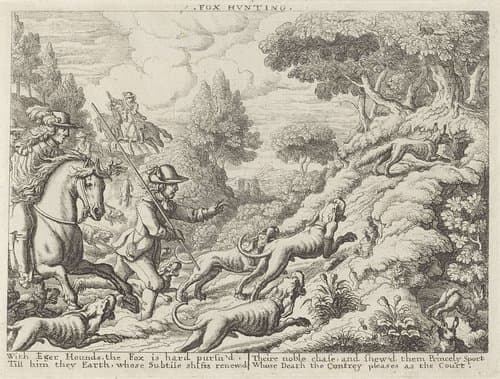
Medium
etching
Dimensions
227; 169
Rights
Public Domain
About this artwork
verzamelaarsmerk, verso, gestempeld: Lugt 2228
Art Historical Context
**Fox Hunt** is a lively etching by Richard Gaywood a prominent 17th-century English printmaker active during the Restoration era. Created in 1671, this intimate work measures 169 mm high by 227 mm wide, capturing the thrill of a fox hunt in fine detail. Etching, Gaywood's favored technique, involved drawing into a wax-coated metal plate with acid etching the lines, allowing for expressive, fluid strokes that brought dynamic energy to scenes of equestrian pursuits—a popular motif reflecting England's aristocratic sporting culture under Charles II. The composition likely depicts hunters on horseback chasing their quarry through countryside terrain, embodying the era's fascination with hunting as both recreation and social ritual. Gaywood's prints, often reproductive or original interpretations of such themes, were collectible items for gentlemen's cabinets, blending technical precision with vivid narrative appeal. On the verso, a stamped collector's mark (Lugt 2228) from the esteemed Museum Boijmans Van Beuningen collection underscores its historical value, tracing ownership among discerning 19th- and 20th-century connoisseurs. This etching invites visitors to appreciate how a small print preserves the exuberance of 17th-century English life.
About the Artist
Richard Gaywood · 1620–1680
Richard Gaywood (fl. 1650–1680) was an English engraver and printmaker who became the most prolific etcher working for the London print trade during the tumultuous years between the English Civil Wars and the Restoration. A pupil of the renowned Wenceslaus Hollar, Gaywood mastered his teacher's distinctive style while developing a thriving practice creating portraits and book frontispieces for Lon...