
Fragment
Unknown Artist
late 18th century
Medium
Bobbin lace
Dimensions
L. 23 x W. 2 1/4 inches (58.4 x 5.7 cm)
Classification
Textiles-Laces
Culture
French
Department
European Sculpture and Decorative Arts
Museum
Metropolitan Museum of Art, New York, NY
Credit
Rogers Fund, 1906
Accession Number
06.679
Rights
Public Domain
Tags
Art Historical Context
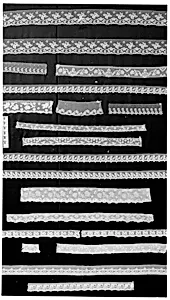
Step into the delicate world of18th-century French lace with this enchanting *Fragment*, a slender strip of bobbin lace measuring 23 by 2¼ inches. Crafted by an unknown artist in the late 1700s, it showcases finely twisted threads forming an intricate pattern of leaves—a motif evoking the natural elegance prized in European decorative arts. Acquired through the Rogers Fund in 1906, this piece now graces the Metropolitan Museum of Art European Sculpture and Decorative collection, classified among textiles-laces. Bobbin lace, a meticulous technique originating in Europe, involves dozens of bobbins weighted with thread, allowing artisans to weave complex designs by crossing and twisting pairs of threads over a pillow-covered pattern. In late 18th-century France, amid the opulence of the Ancien Régime and the eve of Revolution, such laces adorned aristocratic garments, trims, and furnishings, symbolizing luxury and craftsmanship. This fragment likely survived from a larger edging or insertion, highlighting the era's fascination with botanical motifs that bridged Rococo flourish and emerging Neoclassicism. Though incomplete, its preservation offers a tactile glimpse into the skilled hands behind France's lace legacy, centers like Alençon and Argentan. A testament to ephemeral beauty, it invites us to marvel at the patience required to create such airy intricacy.