
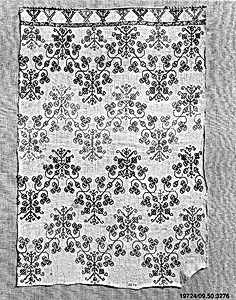
Fragment
Unknown Artist
17th century
Medium
Silk on linen
Dimensions
L. 20 1/2 x W. 13 1/2 inches (52.1 x 34.3 cm)
Classification
Textiles-Embroidered
Culture
Italian
Department
European Sculpture and Decorative Arts
Museum
Metropolitan Museum of Art, New York, NY
Credit
Rogers Fund, 1909
Accession Number
09.50.3276
Rights
Public Domain
Art Historical Context
This delicate *Fragment*, a 17th-century Italian textile, showcases the exquisite craftsmanship of Baroque-era Europe. Measuring 20½ by 13½ inches, it features silk threads worked onto a linen ground, a luxurious combination that speaks to the period's mastery of fine needlework. Acquired through the Rogers Fund in 1909 and now housed in the Metropolitan Museum of Art's Department of European Sculpture and Decor Arts, this piece survives as a testament to Italy's thriving textile traditions. In 17th-century Italy, embroidery was both an art form and a symbol of status, often adorning ecclesiastical vestments, elite garments, or opulent furnishings. Centers like Venice and Genoa, hubs of the silk trade, produced such works for nobility and the Church, blending intricate patterns with vibrant silks imported from the East. The use of silk on linen highlights technical virtuosity—silk's sheen against linen's sturdy weave allowed for detailed motifs that caught the light in lavish interiors. Though its full original context remains a mystery, this fragment invites us to imagine its role in a grander design, preserving a slice of Italy's decorative legacy. It reminds visitors of how everyday materials could become extraordinary through skilled hands, bridging art and daily life in the opulent world of the 1600s.