
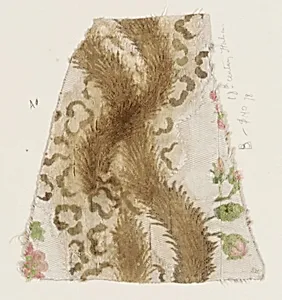
Fragment
Unknown Artist
third quarter 18th century
Medium
Silk
Dimensions
a: 4 3/8 x 19 1/2 in. (11.1 x 49.5 cm) b: 8 x 7 in. (20.3 x 17.8 cm)
Classification
Textiles-Velvets
Culture
Italian or French
Department
European Sculpture and Decorative Arts
Museum
Metropolitan Museum of Art, New York, NY
Credit
Gift of Nanette B. Kelekian, in honor of Olga Raggio, 2002
Accession Number
2002.494.26a, b
Rights
Public Domain
Tags
Art Historical Context
This exquisite silk velvet fragment, dating to the third quarter of the 18th century, hails from either Italy or France—two powerhouses of European textile artistry. Comprising two pieces (one measuring 4⅜ × 19½ inches and the other 8 × 7 inches), it showcases delicate motifs of flowers and leaves, rendered in lush, piled velvet that catches the light with a soft, opulent sheen. Likely salvaged from a larger textile like upholstery, drapery, or luxurious garments, such fragments offer a glimpse into the opulence of Rococo-era interiors and fashion. Silk velvet was a pinnacle of 18th-century craftsmanship, demanding advanced weaving techniques where cut pile created depth and texture. Produced on specialized looms, these velvets were prized for their durability and richness, adorning palaces and elite wardrobes across Europe. Floral designs like those here reflected the era's fascination with nature's abundance, symbolizing vitality and refinement amid the Enlightenment's embrace of ornament. Preserved through a generous 2002 gift to the Metropolitan Museum of Art, this "Fragment" highlights the fragility of textiles—surviving remnants that reveal lost techniques and cultural splendor. Visitors, imagine it draping a Versailles salon or a Venetian palazzo, whispering stories of aristocratic elegance.