
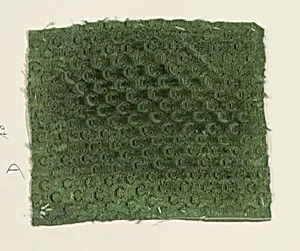
Fragment
Unknown Artist
16th century
Medium
Silk
Dimensions
Overall: 5 1/2 x 4 5/8 in. (14 x 11.7 cm)
Classification
Textiles-Velvets
Culture
Italian, Florence
Department
European Sculpture and Decorative Arts
Museum
Metropolitan Museum of Art, New York, NY
Credit
Gift of Nanette B. Kelekian, in honor of Olga Raggio, 2002
Accession Number
2002.494.76
Rights
Public Domain
Art Historical Context
This exquisite silk velvet fragment hails from 16th-century Florence,—a city renowned as the epicenter of Renaissance textile artistry. Measuring just 5½ x 4⅝ inches, this small survivor offers a tantalizing glimpse into the luxurious world of high-end decorative arts. Produced during a golden age of weaving innovation, Florentine velvets like this one were prized for their rich, plush pile created through a complex cut-pile technique, where silk threads were looped and then sheared to produce a soft, shimmering surface that caught the light dramatically. In Renaissance Europe, such velvets adorned ecclesiastical vestments, noble garments, and opulent furnishings, symbolizing wealth and refinement. Florence's guilds mastered dyeing and patterning silks with vibrant motifs—often florals or pomegranates—exporting them across continents and influencing global fashion. Though the artist remains unknown, the fragment's survival speaks to the enduring allure of these crafts, preserved through careful stewardship. Today, gifted to the Metropolitan Museum of Art in 2002 by Nanette B. Kelekian in honor of Olga Raggio, this piece resides in the European Sculpture and Decorative Arts collection. It invites us to marvel at the ingenuity of anonymous artisans whose work draped the powerful and pious alike.