
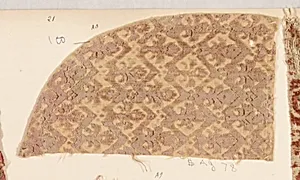
Fragment
Unknown Artist
16th century
Medium
Silk
Dimensions
Overall: 7 3/4 x 4 1/2 in. (19.7 x 11.4 cm)
Classification
Textiles-Velvets
Culture
Italian
Department
European Sculpture and Decorative Arts
Museum
Metropolitan Museum of Art, New York, NY
Credit
Gift of Nanette B. Kelekian, in honor of Olga Raggio, 2002
Accession Number
2002.494.114
Rights
Public Domain
Art Historical Context
This delicate silk velvet fragment, hailing from 16th-century Italy, offers a tantalizing glimpse into the opulent world of Renaissance textiles. Measuring just 7 3/4 x 4 1/2 inches (19.7 x 11.4 cm), it the exquisite craftsmanship of Italian weavers, renowned for their mastery of velvet production during this era. Produced in bustling centers like Venice or Genoa these luxurious fabrics were symbols of wealth and status, adorning the garments of nobility, ecclesiastical vestments, and lavish interiors. Velvet's distinctive cut-pile technique—where silk threads are woven and then sheared to create a soft, lustrous surface—highlighted the technical prowess of Italian artisans. This fragment, classified among textiles-velvets in the Metropolitan Museum of Art's European Sculpture and Decorative Arts department, reflects the period's artistic innovation and trade dominance. Silk velvets were highly prized exports, blending Eastern influences from the Silk Road with European design flair. Generously gifted to the Met in 2002 by Nanette B. Kelekian in honor of Olga Raggio, this survivor piece invites us to ponder the hands that wove it centuries ago. Though small, it embodies the enduring allure of Renaissance decorative arts, whispering stories of elegance and ingenuity.