
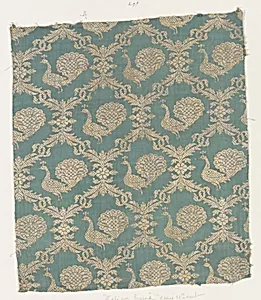
Fragment
Unknown Artist
early 18th century
Medium
Silk, metal thread
Dimensions
Overall: 11 1/2 x 13 1/2 in. (29.2 x 34.3 cm)
Classification
Textiles-Woven
Culture
Italian
Department
European Sculpture and Decorative Arts
Museum
Metropolitan Museum of Art, New York, NY
Credit
Gift of Nanette B. Kelekian, in honor of Olga Raggio, 2002
Accession Number
2002.494.455
Rights
Public Domain
Tags
Art Historical Context
This exquisite *Fragment* from early 18th-century Italy a glimpse into the opulent world of Baroque textile artistry. Woven from lustrous silk and shimmering metal threads, this 11½ × 13½-inch piece (29.2 × 34.3 cm) captures vibrant motifs of peacocks strutting amid blooming flowers. Though created by an unknown artist, it exemplifies the masterful loom techniques of Italian weavers, likely employing a lampas or brocade structure where metal threads—often gold or silver—create raised, reflective patterns for dramatic light play. In the context of Europe's decorative arts, such textiles were prized for furnishing palaces and ecclesiastical vestments, symbolizing wealth and divine beauty. Peacocks, evoking immortality and the Garden of Eden, paired with floral abundance, reflect the era's fascination with nature's splendor amid the transition from Baroque grandeur to Rococo elegance. Italian silk production, centered in cities like Genoa and Venice, dominated trade routes, blending Eastern influences with local innovation. A generous gift to the Metropolitan Museum of Art in 2002 by Nanette B. Kelekian in honor of curator Olga Raggio, this fragile survivor invites us to marvel at centuries-old craftsmanship preserved for modern eyes.