
Fragment
Unknown Artist
early 16th century
Medium
Silk
Dimensions
Overall: 22 1/4 x 14 3/4 in. (56.5 x 37.5 cm)
Classification
Textiles-Woven
Culture
Italian
Department
European Sculpture and Decorative Arts
Museum
Metropolitan Museum of Art, New York, NY
Credit
Gift of Nanette B. Kelekian, in honor of Olga Raggio, 2002
Accession Number
2002.494.634
Rights
Public Domain
Tags
Art Historical Context
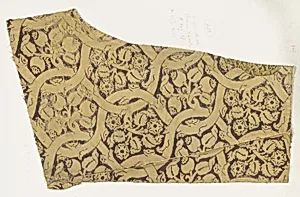
This exquisite silk fragment, in early 16th-century Italy captures the opulence of Renaissance decorative arts. Measuring 22¼ × 14¾ inches, it features intricate motifs of blooming flowers and lush leaves, hallmarks of the period's fascination with nature abundance. Though the artist remains unknown, such textiles were likely produced in prestigious workshops in cities like Florence or Venice, where silk weaving flourished as a symbol of wealth sophistication. Silk, luxurious import from the East via trade routes, was prized for its sheen and durability, often used in ecclesiastical vestments, upholstery, or elite garments. The woven technique here—probably a complex lampas or velvet structure—allowed for rich, tactile patterns that played with light and texture, showcasing Italian mastery in textile innovation during the High Renaissance. Floral designs evoked the era's humanistic revival of classical motifs, blending artistry with symbolism of renewal and beauty. Now in the Metropolitan Museum of Art's European Sculpture and Decorative Arts collection, this fragment—gifted in 2002—offers a glimpse into Renaissance domestic splendor, reminding us how everyday luxury wove history's threads.