
Fragment
Unknown Artist
14th–15th century
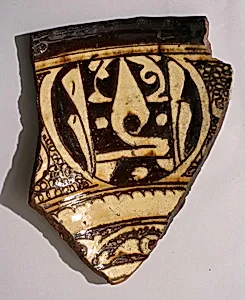
Medium
Earthenware; incised decoration through a white slip and coloring under transparent glaze
Classification
Ceramics
Department
Islamic Art
Museum
Metropolitan Museum of Art, New York, NY
Credit
Rogers Fund, 1907
Accession Number
07.237.9
Rights
Public Domain
Art Historical Context
This exquisite *Fragment* from the th–15th century the masterful ceramic traditions of the Islamic world. Housed in the Metropolitan Museum of Art's of Islamic Art (ac through the Rogers Fund in1907), it is a surviving piece of earthenware pottery, likely from a larger vessel or architectural element. During this vibrant era, Islamic artisans across regions like Persia, Syria, and Egypt produced ceramics that blended functionality with artistry, adorning homes, mosques, and palaces. The artwork's technique is particularly noteworthy: decoration is incised through a white slip—a creamy layer applied over the clay body—revealing the reddish earthenware beneath in a sgraffito style. Vibrant colors are then added and sealed under a transparent glaze, creating a luminous, jewel-like effect. This labor-intensive method, popular in medieval Islamic workshops, allowed for intricate patterns inspired by nature, geometry, and script, reflecting the culture's reverence for beauty in everyday objects. Though only a fragment, it offers a window into the technical innovation and aesthetic refinement of Islamic ceramics, which influenced global pottery traditions. Visitors can appreciate how such pieces elevated utilitarian crafts to high art, embodying the era's blend of craftsmanship, spirituality, and splendor.