
Fragment
Unknown Artist
8th–9th century
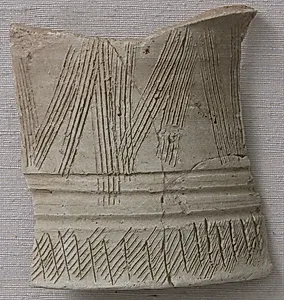
Medium
Earthenware
Dimensions
H. 3 in. (7.6 cm) W. 2 3/4 in. (7 cm) D. 7/8 in. (2.2 cm) Wt. 1 oz. (28.4 g)
Classification
Ceramics
Department
Islamic Art
Museum
Metropolitan Museum of Art, New York, NY
Credit
Rogers Fund, 1932
Accession Number
32.150.455
Rights
Public Domain
Art Historical Context
This delicate earthenware fragment, dating to the 8th–9th century, offers a tantalizing glimpse into the vibrant world of early Islamic ceramics. Housed in the Metropolitan Museum of Art Department of Islamic Art (acquired through the Rogers Fund in 2), it measures just 3 inches high, underscoring the intricate craftsmanship of everyday objects from the Abbasid era, when Islamic culture flourished across the Middle East and beyond. Crafted from earthenware—a low-fired clay valued for its accessibility and durability—this small piece (weighing a mere 1 ounce) likely originated from a vessel, tile, or decorative item. During this period, potters experimented with simple forms and surface treatments, laying the groundwork for later innovations like lusterware and intricate glazing. Though details of its exact form or decoration are lost, such fragments highlight the technical skill and cultural exchange in Islamic workshops, where ceramics bridged utility and artistry. Today, this unassuming relic invites us to ponder the lives of artisans in bustling medieval cities like Baghdad or Samarra, reminding visitors of the enduring legacy of Islamic art in everyday materials.