
Fragment
Unknown Artist
11th–12th century
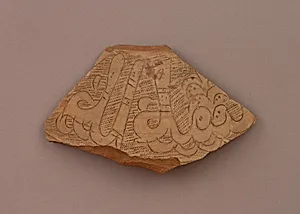
Medium
Earthenware; slip covered and sgraffito decoration, unglazed
Classification
Ceramics
Department
Islamic Art
Museum
Metropolitan Museum of Art, New York, NY
Credit
Rogers Fund, 1940
Accession Number
40.170.690
Rights
Public Domain
Art Historical Context
This exquisite earthenware fragment, dating to the 11th–12th century, offers a glimpse into the vibrant of Islamic ceramics from the Metropolitan Museum of Art's Islamic Art collection. Craft by an unknown artist, it exemplifies unglazed earthenware adorned with slip—a liquid clay applied for color and texture—and sgraffito decoration. Sgraffito, meaning "scratched" in Italian involved incising through the upper slip layer to reveal the contrasting clay beneath, creating intricate patterns that danced in the light. In the medieval Islamic world, such techniques flourished in regions like Persia and Central Asia, where potters innovated to produce affordable yet beautifully decorated wares for everyday use, mosques, and palaces. This unglazed style preserved the raw, earthy warmth of the clay while showcasing the artisan's skill in geometric or floral motifs—hallmarks of Islamic design that symbolized harmony and infinity. Though just a fragment, it whispers of larger vessels or tiles that graced bustling markets and serene courtyards. Acquired through the Rogers Fund in 1940, this piece invites us to appreciate the ingenuity of anonymous craftspeople whose work bridged utility and artistry, influencing ceramic traditions across cultures for centuries.