
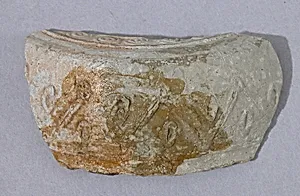
Fragment
Unknown Artist
9th century
Medium
Earthenware; molded decoration, glazed
Classification
Ceramics
Department
Islamic Art
Museum
Metropolitan Museum of Art, New York, NY
Credit
Gift of Mr. and Mrs. Wendell M. Hastings, 1960
Accession Number
60.23.32
Rights
Public Domain
Art Historical Context
This delicate earthenware fragment, dating to the 9th century, offers a glimpse into the vibrant world of early Islamic ceramics. Produced during the Abbasid era—a golden age of Islamic culture—this piece hails from the heart of the Islamic world, potters drew inspiration from Mesopotamian traditions and distant Chinese influences via the Silk Road. As a survivor from what was likely a larger vessel like a bowl or dish, it highlights the everyday artistry that adorned homes and palaces alike. The medium's innovation lies in its molded decoration under a glossy glaze, a technique that allowed artisans to create raised, textured motifs—perhaps floral or geometric patterns typical of the period—adding depth and luminosity. Glazing not only sealed the earthenware for durability but also produced rich, iridescent colors, marking a pivotal advancement in ceramic production that rivaled metalwork and glass. Housed in the Metropolitan Museum of Art's Islamic Art department (gift of Mr. and Mrs. Wendell M. Hastings, 1960), this fragment underscores the cultural emphasis on beauty in utility. Imagine it once gleaming on a merchant's table, bridging artistry and daily life in a thriving caliphate. A testament to anonymous mastery!