
Fragment
Unknown Artist
probably 11th century
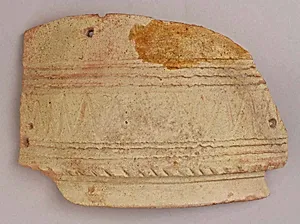
Medium
Earthenware; incised
Classification
Ceramics
Department
Islamic Art
Museum
Metropolitan Museum of Art, New York, NY
Credit
Gift of Mr. and Mrs. Wendell M. Hastings, 1960
Accession Number
60.23.108
Rights
Public Domain
Art Historical Context
This delicate earthenware fragment, likely from the 11th century, offers a glimpse into the refined world of Islamic ceramics. Housed in the Metropolitan Museum of Art's Department of Islamic Art, it exemplifies the artistry of an unknown potter working in a vibrant era of cultural exchange across the Islamic world, from Persia to North Africa. As a simple yet sophisticated vessel shard, it survives as a testament to everyday objects that blended utility with beauty. The medium—earthenware decorated through incising—highlights a masterful technique where designs were scratched into a slip-coated surface before firing, revealing the contrasting clay body beneath. This sgraffito-like method, popular in medieval Islamic pottery, allowed for intricate patterns without costly glazes, making ornate ceramics accessible for homes, mosques, and trade. Though incomplete, the fragment whispers of motifs like florals or geometrics that symbolized harmony and infinity in Islamic aesthetics. Generously gifted by Mr. and Mrs. Wendell M. Hastings in 1960, this piece invites us to appreciate the anonymous hands behind Islamic art's golden age, where clay captured the spirit of innovation and devotion.