
Fragment
Unknown Artist
14th century
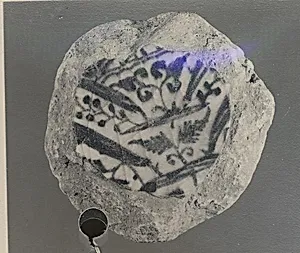
Medium
Stonepaste; painted under transparent glaze
Dimensions
H. 1 3/8 in. (3.5 cm) W. 3 5/8 in. (9.2 cm) D. 3 7/16 in. (8.7 cm) Wt. 6.1 oz. (172.952 g)
Classification
Ceramics
Department
Islamic Art
Museum
Metropolitan Museum of Art, New York, NY
Credit
Gift of Jack A. Josephson, 1973
Accession Number
1973.79.65
Rights
Public Domain
Art Historical Context
This delicate 14th-century ceramic fragment, hailing from the Islamic world, offers a glimpse into the refined artistry of medieval potters. Measuring just 1⅜ inches high and weighing a mere 6.1 ounces, it is a modest survivor—likely part of a larger, tile, or decorative. Crafted in stonepaste (also known as fritware), a composite material of quartz, clay, and glass frit, it was painted with pigments under a transparent glaze before firing. This technique, perfected in the Islamic Near East during the 13th–15th centuries, created vibrant, durable surfaces that mimicked the translucency of coveted Chinese porcelain. Stonepaste ceramics represented a pinnacle of innovation in Islamic art, flourishing under dynasties like the Ilkhanids in Persia and the Mamluks in Egypt and Syria. The underglaze painting allowed for intricate motifs—though worn here, they once likely featured floral patterns, geometric designs, or calligraphy, hallmarks of the era's aesthetic. This method ensured colors remained vivid and resistant to wear, making such wares prized for both daily use and export. Now housed in the Metropolitan Museum of Art's Department of Islamic Art, thanks to a 1973 gift from Jack A. Josephson, this fragment underscores the technical ingenuity and cultural exchange that defined Islamic ceramics. It invites us to appreciate how everyday materials became canvases for exquisite beauty in a golden age of craftsmanship.