
Fragment
Unknown Artist
14th–15th century
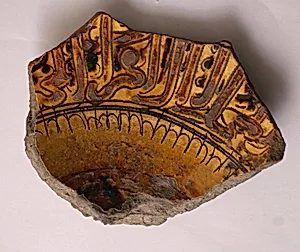
Medium
Earthenware; incised decoration through white slip and coloring under transparent glaze
Classification
Ceramics
Department
Islamic Art
Museum
Metropolitan Museum of Art, New York, NY
Credit
Rogers Fund, 1908
Accession Number
08.256.202
Rights
Public Domain
Art Historical Context
This exquisite *Fragment* from the th–15th century a glimpse into the masterful ceramic traditions of the Islamic world. Crafted from earthenware, it exemplifies the sophisticated techniques of the period, where artisans applied a white slip—a liquid clay mixture—over the body. They then incised intricate designs this layer, revealing the clay, before adding vibrant colors and sealing it all under a transparent glaze. This method, akin to sgraffito, allowed delicate patterns that shimmered with light, blending functionality with artistry. In the Islamic Art collection at The Metropolitan Museum of Art (acquired through the Rogers Fund in 1908), such fragments highlight the era's cultural flourishing, likely from regions like Persia or Syria during the Timurid or Mamluk periods. Ceramics like this were everyday treasures—used in homes, mosques, and palaces—symbolizing the Islamic emphasis on beauty in utility. Though the full design is lost, the surviving piece reveals the precision and innovation of anonymous potters, whose work influenced global ceramics for centuries. (178 words)