
Fragment
Unknown Artist
13th century
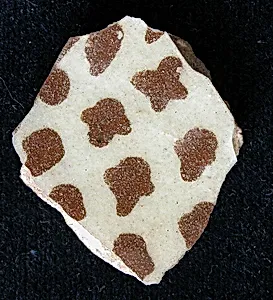
Medium
Stonepaste; luster-painted
Dimensions
H. 1 3/8 in. (3.5 cm) W. 1 1/8 in. (2.9 cm) D. 5/16 in. (0.8 cm) Wt. 0.2 oz. (5.7 g)
Classification
Ceramics
Department
Islamic Art
Museum
Metropolitan Museum of Art, New York, NY
Credit
Rogers Fund, 1908
Accession Number
08.184.61
Rights
Public Domain
Art Historical Context
This delicate fragment, hailing from the 13th century exemplifies the pinnacle of Islamic ceramic artistry. Crafted in stonepaste—a fine, white-bodied material developed by artisans in the medieval Islamic world to imitate Chinese porcelain—it measures just 1 3/8 inches high and weighs a mere 0.2 ounces. The surface bears luster-painting, a sophisticated technique where metallic oxides fired in a reducing atmosphere create a shimmering, iridescent reminiscent of gold or moonlight. Lusterware like this flourished in regions such as Iraq, Syria, and Iran during the Abbasid and Seljuk eras, adorning mosques, palaces, and luxury vessels. Its production demanded masterful control over kilns and glazes, reflecting the era's scientific ingenuity in chemistry and optics. Though only a small piece survives—likely from a tile, bowl, or mihrab decoration—it hints at the opulence of Islamic courts, where such ceramics symbolized prosperity and divine beauty. Acquired through the Rogers Fund in 1908, this fragment now resides in the Metropolitan Museum of Art's Islamic Art department. It invites us to marvel at the anonymous craftsmen's skill, bridging everyday devotion with artistic splendor in a turbulent century marked by Mongol invasions and cultural exchange.