
Fragment
18th century
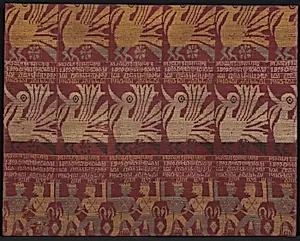
Medium
Silk, plain weave with plain interlacings of secondary binding warps
Dimensions
65.1 × 80.7 cm (25 5/8 × 31 3/4 in.)
Classification
textile
Department
Textiles
Museum
Art Institute of Chicago
Accession Number
189599
Rights
Public Domain
Art Historical Context
This exquisite *Fragment* from the th century offers a glimpse into the masterful textile arts of the period. Crafted from luxurious silk using a plain weave enhanced by plain interlacings of secondary bindingps, this technique allowed weavers to create subtle patterns and textures through supplementary threads that bind into the fabric without dominating the base structure. Measuring 65.1 × 80.7 cm (25 5/8 × 31 3/4 in.), its substantial size suggests it may have been part of a larger garment furnishing fabric, or ceremonial textile, preserving the opulence of silk production during an era of global trade and refinement. Though the artist remains unknown, the fragment highlights the anonymous yet highly skilled labor behind 18th-century textiles, often produced in workshops across Europe, Asia, or the Islamic world where silk weaving reached pinnacles of innovation. The use of secondary binding warps exemplifies advanced loom technology, enabling intricate designs that spoke to wealth and status—silk was a prized commodity, symbolizing luxury from royal courts to merchant elites. Housed in the Art Institute of Chicago's Textiles Department, this piece invites us to appreciate the tactile artistry of weaving, a craft that blended utility with beauty. Though incomplete, its survival underscores the enduring cultural value of such fragments in reconstructing fashion history and weaving traditions.
About the Artist
Unknown
The artist designated as "Unknown" in our virtual museum's collection exemplifies a poignant chapter in art history: creators whose identities have faded into obscurity despite the enduring power of their work. With only one known artwork attributed to them in our holdings, this figure represents countless anonymous hands that shaped visual culture across centuries. Museums worldwide, including th...