
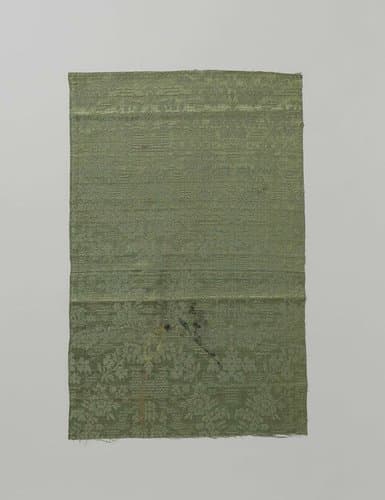
Fragment groen zijdedamast
Unknown Artist
1750
Medium
damask
Dimensions
51.5; 23.5; 34; 34.1; 1
Rights
Public Domain
About this artwork
zelfkant: breedte 1 cm
Art Historical Context
This exquisite fragment of green silk damask, dating to 1750, offers a glimpse into the opulent world of 18th-century textiles. Measuring 51.5 cm high by 34 cm wide, it exemplifies the luxurious weaving traditions of the Rococo era, when silk damasks adorned the grand interiors of palaces, churches, and wealthy homes across the Netherlands and beyond. The vibrant green hue, achieved through natural dyes, would have shimmered under candlelight, symbolizing prosperity and refinement. Damask, a reversible fabric created through a sophisticated weaving technique, features a patterned design formed by contrasting satin and sateen weaves. This method, perfected in European looms by the 18th century, allowed for intricate motifs—likely floral or architectural in this case—without additional embroidery. The preserved selvedge, a clean 1 cm edge, reveals the weaver's precision, preventing fraying and indicating this fragment came from a larger bolt of high-quality cloth intended for upholstery or drapery. As an anonymous masterpiece of textile art, it highlights the skilled craftsmanship of unknown artisans whose work rivaled painting in cultural prestige. Today, such fragments remind us how textiles wove themselves into the fabric of daily luxury and social display.