
Fragment of a Bowl
Unknown Artist
13th century
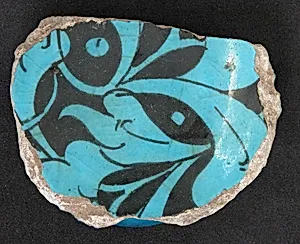
Medium
Stonepaste; underglaze painted
Dimensions
Gr. Diam. 4 1/16 in. (10.3 cm) Gr. H. 1 3/16 in. (3 cm)
Classification
Ceramics
Department
Islamic Art
Museum
Metropolitan Museum of Art, New York, NY
Credit
Rogers Fund, 1908
Accession Number
08.256.166
Rights
Public Domain
Art Historical Context
This delicate fragment of a 13-century bowl, crafted from stonepaste with underglaze painting, offers a glimpse into the refined world of Islamic ceramics. Housed in the Metropolitan Museum of Art's Islamic department, it measures just over 4 inches in diameter 1 inch high, suggesting it once formed part of a larger, elegant vessel used for everyday dining or ceremonial purposes. Acquired through the Rogers Fund in 8, this shard preserves the ingenuity of artisans from the medieval Islamic world, where pottery flourished amid cultural and technological exchanges. Stonepaste, also known as fritware, was a groundbreaking medium developed in the 11th century across regions like Iran and Syria. It combined quartz, clay, and glass frit to create a white, porcelain-like body that could withstand high firing temperatures—ideal for the translucent glazes that followed. The underglaze technique involved painting designs directly onto the unfired body before applying a clear glaze, then firing it to fuse colors vibrantly beneath the surface. This method allowed for intricate motifs, though sadly lost on this fragment, and marked a high point in Islamic ceramic innovation during the 13th century, a time of artistic patronage under sultans and caliphs. Though incomplete, this piece highlights the cultural importance of ceramics in Islamic society, where tableware blended utility with beauty, often adorned with calligraphy, florals, or geometry symbolizing spiritual harmony. It invites us to ponder the skilled hands behind it and the vibrant markets of medieval cities like Kashan or Damascus.