
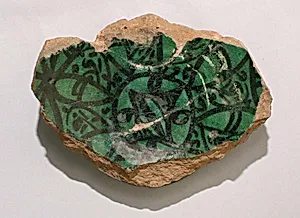
Fragment of a Bowl
Unknown Artist
14th–15th century
Medium
Stonepaste; underglaze painted under green glaze
Classification
Ceramics
Department
Islamic Art
Museum
Metropolitan Museum of Art, New York, NY
Credit
Rogers Fund, 1913
Accession Number
13.190.115
Rights
Public Domain
Art Historical Context
This exquisite fragment of a bowl, dating to the 14th–15th, offers a glimpse into the masterful world of Islamic ceramics from the Metropolitan Museum of Art's Islamic Art collection. Acquired the Rogers Fund in 3, it survives as a testament to the ingenuity of artisans in regions like Syria or Egypt during the Mamluk period, when pottery flourished amid vibrant trade and cultural exchange along the Silk Roads. Though only a piece remains, its delicate form hints at the everyday elegance of tableware used in prosperous households. Crafted from stonepaste—a fine, white-frit body developed by Islamic potters to imitate Chinese porcelain—this medium allowed for exceptional translucency and durability. The underglaze painting, vibrantly colored and then sealed beneath a shimmering green glaze, exemplifies a sophisticated technique that ensured colors wouldn't fade. This method, perfected in the medieval Islamic world, influenced ceramics across Eurasia and highlighted the era's advances in chemistry and design. For visitors, this fragment captures the cultural importance of ceramics in Islamic society, where beauty elevated the mundane. Its green hue evokes lush gardens of paradise, a common motif blending art, faith, and daily life. A small survivor, it invites us to ponder the skilled hands behind its creation.