
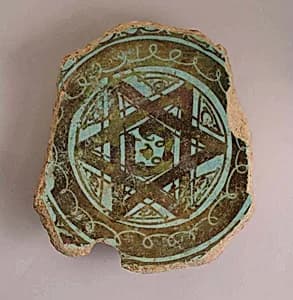
Fragment of a Bowl
Unknown Artist
10th–12th century
Medium
Earthenware; underglaze painted
Classification
Ceramics
Department
Islamic Art
Museum
Metropolitan Museum of Art, New York, NY
Credit
The Grinnell Collection, Bequest of William Milne Grinnell, 1920
Accession Number
20.120.196
Rights
Public Domain
Tags
Art Historical Context
This exquisite fragment of a bowl, by an unknown artist between the 10th and 12th centuries, offers a glimpse into the vibrant of Islamic ceramics. Housed in the Metropolitan Museum of Art Islamic Art department as part of The Grinnell Collection (bequest of William Milne Grell, 1920), it exemplifies earthenware adorned with underglaze painting pioneering technique where pigments are applied directly to the unfired clay body before a transparent glaze is added and the piece is fired. This method ensured durable, vivid designs that withstood daily use, revolutionizing pottery production across the Islamic world from regions like Iraq, Iran, and Egypt during the Abbasid and Fatimid eras. The fragment's star motifs, a hallmark of Islamic art, reflect the culture's fascination with geometry, astronomy, and celestial harmony. Stars symbolized divine order and the cosmos, often integrated into intricate patterns that avoided human or animal figures in line with aniconic traditions. Such ceramics were not just utilitarian but status symbols in households and mosques, blending functionality with spiritual artistry. Though only a shard survives, it preserves the ingenuity of medieval potters, inviting us to imagine the complete bowl gracing a bustling medieval table. A testament to enduring craftsmanship, it highlights how Islamic artisans influenced global ceramics for centuries.