
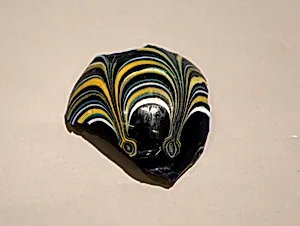
Fragment of a Glass Vase
Unknown Artist
ca. 1390–1352 B.C.
Medium
Glass
Dimensions
H. 4.5 cm (1 3/4 in), w. 4.5 cm (1 3/4 in)
Classification
Vase fragment
Period
New Kingdom
Department
Egyptian Art
Museum
Metropolitan Museum of Art, New York, NY
Credit
Rogers Fund, 1912
Accession Number
12.180.363
Rights
Public Domain
Art Historical Context
This exquisite fragment of a glass vase dating to ca. 1390–1352 B.C., hails from Egypt's New Kingdom during Dynasty 18—a golden age of imperial power and artistic innovation under pharaohs likehotep III. Measuring just 4.5 cm in height and width, this tiny survivor captures the fragility and finesse of ancient craftsmanship, now preserved in the Metropolitan Museum of's Egyptian Art department, thanks to the Rogers Fund of 1912. Glass was a revolutionary medium in ancient Egypt, emerging as a luxury rivaling precious stones during the New Kingdom. Artisans molded it into vessels for elite use, often in vibrant blues and greens mimicking lapis lazuli or turquoise. Though incomplete, this piece hints at the technical prowess required to shape molten glass without molds, a skill that spread from royal workshops and symbolized wealth and divine favor. As a testament to Egypt's material ingenuity, the fragment invites us to marvel at how such a small object endured millennia, whispering stories of a civilization at its zenith.