
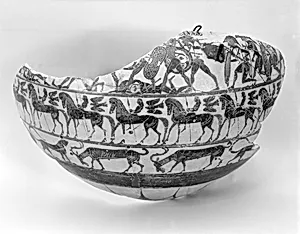
Fragment of a terracotta column-krater (bowl for mixing wine and water)
ca. 590–570 BCE
Medium
Terracotta
Dimensions
H. 10 3/8 in. (26.4 cm) length 15 3/16 in. (38.6 cm)
Classification
Vases
Culture & Period
Greek, Corinthian · Middle Corinthian
Department
Greek and Roman Art
Museum
Metropolitan Museum of Art, New York, NY
Credit
Rogers Fund, 1912
Accession Number
12.229.9
Rights
Public Domain
Tags
Art Historical Context
This fragment of a terracotta columnater, dating to around 590–570 BCE, hails from Middle Corinthian Greece, a vibrant hub of early pottery production. Column-kraters were essential vessels for mixing wine and water during symposia—lively social gatherings where elites debated philosophy and reveled in poetry. Crafted by the Cavalcade Painter, a of Corinthian black-figure technique, this piece captures the period's hallmark style: intricate friezes of animals and figures incised into the clay before firing, then filled with glossy black slip for dramatic contrast against the orange terracotta. The preserved section, measuring about 10 inches high and 15 inches long, teems with life through depictions of goats, horses, birds, and men—likely evoking a dynamic cavalcade or procession, a motif that earned the artist his name. Corinthian vases like this dominated Mediterranean trade, exporting their whimsical animal motifs far and wide, influencing Attic pottery and beyond. Though only a fragment survives, it showcases the precision of wheel-thrown forms and the painter's skill in storytelling without words. Acquired through the Rogers Fund in 1912, this treasure from the Metropolitan Museum of Art's Greek and Roman collection offers a window into ancient Corinth's cultural prowess, blending utility, artistry, and myth in everyday luxury.