
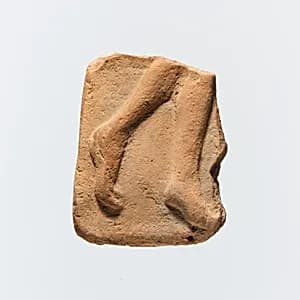
Fragment of a terracotta plaque
Unknown Artist
late 5th century BCE
Medium
Terracotta
Dimensions
3 1/8 in. x 2 1/2 in. (7.9 cm x 6.3 cm)
Classification
Terracottas
Culture & Period
Greek · Classical
Department
Greek and Roman Art
Museum
Metropolitan Museum of Art, New York, NY
Credit
Gift of the Archaeological Institute of America, 1953
Accession Number
53.5.42
Rights
Public Domain
Tags
Art Historical Context
This delicate fragment of a terracotta, dating to the late 5th century BCE, offers a glimpse into the vibrant of Classical Greek art. just 3 18 x 2 1/2, it captures the feet of dancing women, their dynamic poses suggesting rhythmic movement and communal celebration. Crafted from terracotta—fired clay that was both durable and accessible—this small plaque exemplifies the everyday artistry of ancient Greece, where such objects adorned homes, shrines, or public spaces. In the Classical period, terracotta plaques like this were often mass-produced using molds, allowing intricate details like the subtle curves of toes and the implication of flowing garments to convey grace and energy. Dance held profound cultural significance in Greek society, linked to religious festivals, Dionysian rites, and women's rituals, evoking joy, fertility, and divine communion. Though a mere fragment, it reflects the era's mastery of naturalism and motion, hallmarks of artists like those behind the Parthenon sculptures. Today, housed in the Metropolitan Museum of Art's Greek and Roman Art Department (gift of the Archaeological Institute of America, 1953), this piece invites us to imagine the lively scenes it once complemented, bridging the ancient and modern worlds through its timeless elegance.