
Fragment of a Tunic
Unknown Artist
3rd–4th century
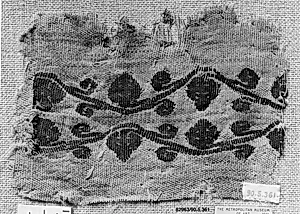
Medium
Wool, linen; plain weave, tapestry weave
Dimensions
Max. H. 4 7/8 in. (12.4 cm) Max. W. 3 1/4 in. (8.2 cm)
Classification
Textiles
Department
Islamic Art
Museum
Metropolitan Museum of Art, New York, NY
Credit
Gift of George F. Baker, 1890
Accession Number
90.5.361
Rights
Public Domain
Art Historical Context
This delicate **Fragment of a Tunic dating to the 3–4th century, us into the world of ancient garment-making. Crafted from wool and linen using plain weave for the sturdy base and tapestry weave for decoration, this tiny survivor measures just 4 7/8 by 3 1/4 inches. Preserved in the Metropolitan Museum of Art's Department of Islamic Art, it entered the collection as a gift from George. Baker in 1890. Tunics like this were everyday wear across the late Roman and early Byzantine Near East, often adorning people from all walks of life. Fragments such as this one frequently survive from burials in arid climates, like Egypt, where dry conditions preserved textiles otherwise lost to time. The tapestry technique—interlocking colored weft threads to form motifs without waste—was a hallmark of skilled weavers, allowing for bold patterns on narrow loom widths. Though the artist remains unknown, this piece whispers of cultural interconnectedness in a pivotal era, showcasing practical artistry that bridged classical traditions and the dawn of Islamic influences in textile production. A testament to humble yet masterful craftsmanship!