
Fragment of Headdress
Unknown Artist
late 17th–early 18th century
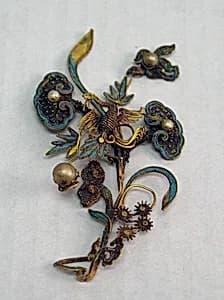
Medium
Gold, feathers, pearls
Dimensions
W. 2 1/4 in. (5.7 cm); L. 3 1/2 in. (8.9 cm)
Classification
Jewelry
Culture & Period
China · Qing dynasty (1644–1911)
Department
Asian Art
Museum
Metropolitan Museum of Art, New York, NY
Credit
Rogers Fund, 1930
Accession Number
30.76.308
Rights
Public Domain
Art Historical Context
This exquisite *Fragment of Headdress* China's Qing dynasty (1644–1911), dating to the late 17th or early 18th century offers a glimpse into the op world of imperial adornment. Crafted by unknown artist, it measures just 3½ inches long and 2¼ inches wide, yet dazzles with gold filigree, lustrous pearls, and vibrant. Such materials were reserved for the elite, symbolizing wealth, status, and harmony with nature in Confucian-influenced court culture. During the Qing era, under Manchu rule, headdresses were essential for women of the nobility, especially during ceremonies or weddings. Elaborate phoenix motifs—common in such pieces—represented virtue and prosperity, blending meticulous goldsmithing techniques with featherwork for a lightweight, shimmering effect. This fragment likely survived from a larger, towering structure, showcasing the dynasty's mastery of luxury jewelry that fused Chinese traditions with innovative embellishments. Today, housed in the Metropolitan Museum of Art's Asian Art department (Rogers Fund, 1930), it invites visitors to ponder the artistry behind everyday imperial splendor. Though small, its delicate preservation highlights the enduring allure of Qing craftsmanship.