
Fragment veelkleurig mexicaine
c. 1750 - c. 1800
Medium
tabby
Dimensions
16.5; 23.5; 22.4
Rights
Public Domain
About this artwork
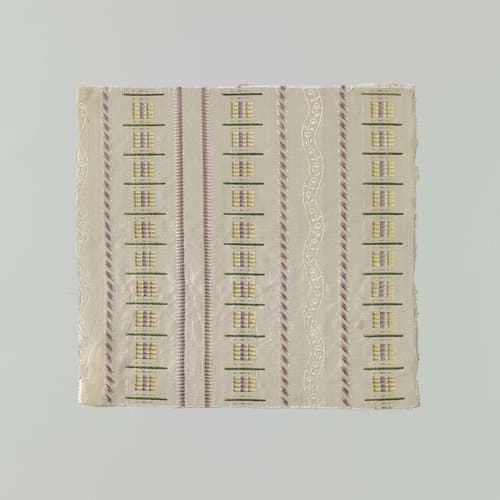
Een fragment van witte zijden grond met strepen en blokken van groen, geel en paars. Opmerking: Witte figurering ook door extra ketting stelsel.
Art Historical Context
This exquisite fragment, titled *Fragment veelkleurig mexicaine*, dates to around 1750–1800 and exemplifies anonymous craftsmanship in late 18th-century textile art. Woven in a fine tabby weave—a simple yet versatile plain structure—on a white silk ground, it measures just 22.4 cm high by 23.5 cm wide. Vibrant stripes and blocks of green, yellow, and purple create a bold, multicolored pattern, evoking the exotic "mexicaine" style popular in Europe, which drew inspiration from vibrant motifs of Mexican or Indian textiles traded via colonial routes. The piece's ingenuity lies in its weaving technique: the white figurations are achieved not just through color contrast but via an extra warp (chain) system. This supplementary warp allowed weavers to introduce intricate patterns without changing the base structure, showcasing advanced loom technology of the Rococo and early Neoclassical eras. Such methods were prized for producing luxurious fabrics affordable to the emerging middle class. As a surviving fragment, it offers a glimpse into Europe's fascination with global influences during the Age of Enlightenment, when silk textiles symbolized wealth, fashion, and cross-cultural exchange. Visitors can appreciate how this small artifact captures the vibrancy and technical mastery of period weaving.
About the Artist
anonymous
In the vast tapestry of art history, "Anonymous" stands not as a singular individual but as a collective designation for countless unidentified creators whose works have endured across millennia. These artists, spanning prehistoric cave painters to medieval illuminators and folk craftsmen, produced the foundational layers of human visual culture. Prior to the Renaissance, when individual fame emer...