
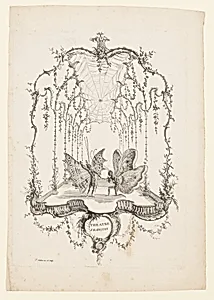
French Theatre (Théatre Français), from Essai de Papilloneries Humaines par Saint Aubin
ca. 1756–60
Medium
Etching; first state of two
Dimensions
plate: 12 13/16 x 9 3/8 in. (32.5 x 23.8 cm) sheet: 15 1/2 x 10 13/16 in. (39.3 x 27.4 cm)
Classification
Prints
Department
Drawings and Prints
Museum
Metropolitan Museum of Art, New York, NY
Credit
The Elisha Whittelsey Collection, The Elisha Whittelsey Fund and Rogers Fund, 1982
Accession Number
1982.1101.5
Rights
Public Domain
Tags
Art Historical Context
Step into the whimsical world of 18th French satire with *French Theatre (Thé Français)*, an etching by Charles-Germain de Saint-Aubin, around 1756–60. Part of the artist's *Essai de Papillon Humaines* ("Essay on Human Butterflies"), print captures the lively spirit of Paris's premier theater during the Rococo era, time when opulent entertainment and social commentary flourished. Saint-Aubin, one of the talented Saint-Aubin brothers renowned for their intricate engravings, infused his works with playful humor, often personifying human follies through insect motifs like butterflies—symbolizing fleeting, flamboyant lives akin to actors on stage. This first-state etching, measuring about 12¾ x 9⅜ inches on the plate, showcases Saint-Aubin's masterful technique: fine lines and delicate shading that bring to life garlands, performers, and butterfly elements evoking theatrical spectacle. Etching allowed for the nuanced textures of costumes and scenery, making it a prized medium for reproductive prints that democratized high culture. Held in the Metropolitan Museum of Art's Drawings and Prints department (The Elisha Whittelsey Collection), it reflects the era's fascination with theater as a mirror to society. Delight in this charming piece, where actors flutter like butterflies amid garlands, offering a lighthearted glimpse into Enlightenment-era Paris—perfect for pondering the timeless dance between artifice and reality.