
Frieze
Unknown Artist
18th century
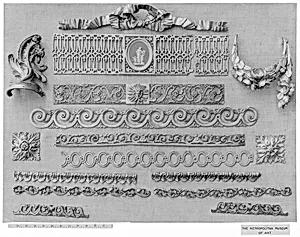
Medium
Gilt bronze
Dimensions
Length (.552a): 11 1/2 in. (29.2 cm); Length (.522b): 4 3/4 in. (12.1 cm)
Classification
Metalwork-Gilt Bronze
Culture
French
Department
European Sculpture and Decorative Arts
Museum
Metropolitan Museum of Art, New York, NY
Credit
Gift of J. Pierpont Morgan, 1906
Accession Number
07.225.510.552a–c
Rights
Public Domain
Art Historical Context
This exquisite gilt bronze *Frieze* from 18th-century France exemplifies the opulent metalwork of the European decorative arts. Crafted by an unknown artist, it consists of two segments—measuring 11½ inches (29.2 cm) and 4¾ inches (12.1 cm) in length—likely intended as a decorative band for furniture, frames, or architectural elements. The shimmering gold surface, achieved through gilding techniques like mercury gilding or electroplating precursors, reflects the era's mastery in creating luxurious, reflective finishes that caught the candlelight in grand salons. In the lavish world of Louis XV and Louis XVI France, such friezes were prized for their intricate motifs, often featuring scrolling foliage, mythological figures, or neoclassical motifs, adding elegance to aristocratic interiors. Gilt bronze was a hallmark of *fondeur-ciseleur* workshops in Paris, where skilled artisans cast and chased bronze before applying thin gold layers for enduring brilliance. This piece's survival highlights the technical prowess that made French metalwork a global export. Generously gifted to the Metropolitan Museum of Art by J. Pierpont Morgan in 1906, the *Frieze* invites us to appreciate the artistry behind everyday opulence, bridging sculpture and design in a golden glow. (198 words)