
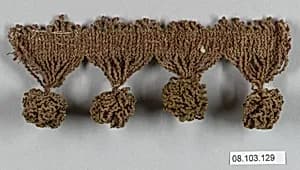
Fringe
Unknown Artist
19th century
Medium
Cotton and metal thread
Dimensions
5 3/4 x 1 3/4 inches 14.6 x 4.4 cm
Classification
Textiles-Trimmings
Culture
British
Department
European Sculpture and Decorative Arts
Museum
Metropolitan Museum of Art, New York, NY
Credit
Rogers Fund, 1908
Accession Number
08.103.129
Rights
Public Domain
Art Historical Context
Nestled in the Metropolitan Museum of Art's European Sculpture and Decorative collection, this delicate *Fringe* from 19th-century Britain showcases the artistry of everyday embellishment. Crafted by an unknown artist using cotton and metal threads, this textile trimming measures just 5¾ x 1¾ inches (14.6 x 4.4 cm). The combination of humble cotton with shimmering metal threads creates a luxurious texture, likely designed to adorn garments, upholstery, or curtains, adding a touch of opulence to Victorian interiors and attire. In the bustling era of Britain's Industrial Revolution, such trimmings were a hallmark of decorative excess, reflecting social status and craftsmanship amid rapid textile production advances. Fringes like this one, classified as Textiles-Trimmings, highlight the period's fusion of machine-made efficiency and hand-finished detail, where metal threads caught the light to evoke wealth and refinement. Acquired through the Rogers Fund in 1908, this piece invites us to appreciate the unsung heroes of fashion and design—small-scale wonders that elevated the ordinary into the extraordinary. A testament to British cultural ingenuity, it reminds visitors how textiles wove stories of elegance into daily life.