
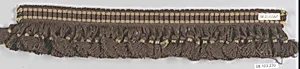
Fringe
Unknown Artist
19th century
Medium
Silk
Dimensions
2 1/4 x 12 inches 5.7 x 30.5 cm
Classification
Textiles-Trimmings
Culture
European
Department
European Sculpture and Decorative Arts
Museum
Metropolitan Museum of Art, New York, NY
Credit
Rogers Fund, 1908
Accession Number
08.103.230
Rights
Public Domain
Art Historical Context
Step into the opulent world of 19-century European decorative arts with *Fringe*, a delicate silk trimming that exemplifies the era's passion for lavish embellishment. Measuring just 2¼ x 12 inches (5.7 x 30.5 cm), this slender piece from an unknown artist was crafted as a textile trimming—likely used to adorn garments, upholstery, or curtains. Acquired through the Rogers Fund in 1908 now housed in the Metropolitan Museum of Art Department of European Sculpture and Decor Arts, it highlights the museum's commitment to preserving everyday luxuries of the past. Silk, prized for its luster and durability, was a hallmark of high-end European textiles during the Victorian period, when intricate trimmings like this added drama and status to fashion and interiors. Though the exact technique remains a mystery, such fringes often involved skilled weaving or looping to create their flowing, tasseled edges, reflecting the meticulous craftsmanship of the time. This artifact offers a glimpse into the cultural obsession with ornamentation, bridging fashion and fine arts. As a classified "Textiles-Trimmings" piece of European culture, *Fringe* invites us to appreciate the unsung artistry in functional beauty—reminding visitors how small details wove grandeur into daily life.