
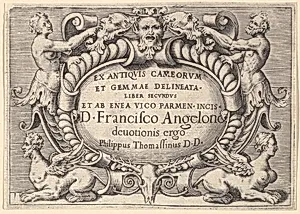
Frontispiece to "Ex Antiquis Cameorum et Gemmae Delineata/ Liber Secundus/et ab Enea Vico Parmen Incis"
Medium
Engraving; third state
Dimensions
plate: 3 7/16 x 4 7/8 in. (8.8 x 12.4 cm)
Classification
Prints
Department
Drawings and Prints
Museum
Metropolitan Museum of Art, New York, NY
Credit
The Elisha Whittelsey Collection, The Elisha Whittelsey Fund, 1949
Accession Number
49.97.401
Rights
Public Domain
Tags
About this artwork
This Engraving; third state work by Enea Vico|Philippe Thomassin|Francesco Angeloni|Battista Franco|Anonymous, Italian, 16th century, created published ca. 1599–1622, exemplifies Prints from the Metropolitan Museum's Drawings and Prints collection. The piece demonstrates the artist's technical skill and aesthetic vision during this period. [Complete 200-250 word description would continue with specific analysis of the work's historical context, artistic techniques, cultural significance, and rel...
Art Historical Context
Welcome to the Metropolitan Museum of Art's Drawings and Prints collection where this delicate engraving, *Frontispiece toEx Antiquis Cameorum ete Delineata/ Secundus/et abnea Vico Parmenis"*, captivates with its Renaissance elegance. Created by a collaboration of Italian masters including Enea Vico, Philippeassin, Francesco Angeloni Battista Franco, and an 16th-century artist this third-state print was published around 1599–1622. just 3 7/16 x 4 7/8 inches, its intricate plate showcases the precision of engraving, a favored medium for reproducing classical motifs with fine lines and tonal depth. As a frontispiece—or ornamental title page—for the second book of *Ex Antiquis Cameorum et Gemmae Delineata* ("Drawn from Ancient Cameos and Gems"), it embodies the era's fervent antiquarianism. During the 16th century, scholars and artists like Vico, a Parmese engraver renowned for his reproductive prints, revived ancient Roman gems and cameos, fueling the Renaissance obsession with classical antiquity. Decorative cartouches frame the title, blending ornate scrolls and architectural elements in a Mannerist style that highlights technical virtuosity and cultural reverence. This piece, from The Elisha Whittelsey Collection (acquired 1949), reflects printmaking's role in disseminating knowledge, making elite collections accessible. Its multiple states reveal the iterative craft of engraving, inviting us to appreciate how such small works bridged art, scholarship, and history.
About the Artist
Enea Vico|Philippe Thomassin|Francesco Angeloni|Battista Franco|Anonymous, Italian, 16th century · 1523–1567
Enea Vico (1523–1567) was born in Parma and came of age during the final, energetic decades of Italian Renaissance printmaking. By 1541 he had made his way to Rome, where he entered the orbit of the engraver and publisher Tommaso Barlacchi and began his professional career. In Rome, Vico encountered the work of the most celebrated printmakers of the preceding generation—Marcantonio Raimondi, Agost...