
Fugaku sanjurokkei
1829 - 1833
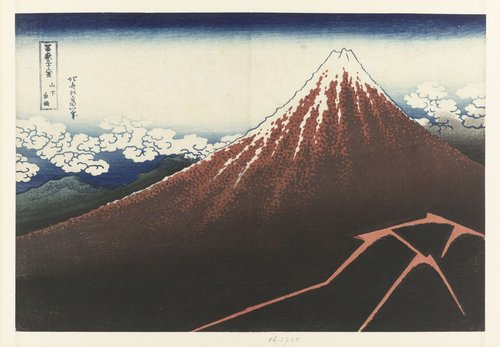
Medium
color woodcut
Dimensions
375; 254
Rights
Public Domain
About this artwork
height 254 mm x width 375 mm
Art Historical Context
Katsushika Hokusai’s *Fugaku sanjurokkei* (*Thirty-Six Views of Mount Fuji*), created between 1829 and 1833, is one of the most celebrated series in Japanese art history. This set of color woodblock prints captures Japan’s iconic mountain from diverse angles and seasons, transforming a familiar landmark into a dynamic subject of artistic exploration. Working in the ukiyo-e tradition, Hokusai combined precise observation with imaginative compositions that appealed to a broad audience during Japan’s Edo period. The medium of color woodcut allowed Hokusai to employ vibrant pigments, notably the newly imported Prussian blue, which gave the prints their striking intensity. Each sheet, measuring roughly 254 by 375 millimeters, demonstrates the collaborative craft of ukiyo-e production, involving designers, carvers, and printers. The series reflects growing interest in travel and landscape imagery among Japan’s urban population at the time. Widely admired for its innovative perspectives and sense of movement, *Thirty-Six Views* helped introduce Japanese printmaking to the West and influenced later artists from Impressionists to modern designers. The prints remain enduring symbols of both natural beauty and artistic ingenuity.
About the Artist
Katsushika Hokusai · 1760–1849
Katsushika Hokusai (1760-1849) stands as one of history's most influential artists, a Japanese master who revolutionized the ukiyo-e woodblock print tradition and profoundly shaped Western art. Born in the Katsushika district of Edo (modern-day Tokyo) to an artisan family, Hokusai lived through nearly nine decades of extraordinary creative evolution, adopting over thirty different artistic names t...