
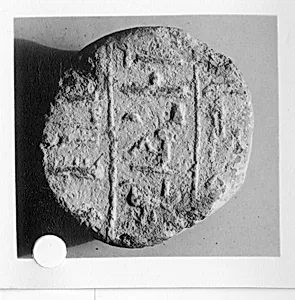
Funerary Cone
Unknown Artist
ca. 1550–1295 B.C.
Medium
Pottery
Dimensions
Preserved L. 3.5 cm (1 3/8 in.); Diam. 6.5 cm (2 9/16 in.)
Classification
Cone
Period
New Kingdom
Department
Egyptian Art
Museum
Metropolitan Museum of Art, New York, NY
Credit
Gift of Norman de Garis Davies, 1930
Accession Number
30.6.180
Rights
Public Domain
Tags
Art Historical Context
This modest yet poignant funerary cone, crafted from pottery around 1550–1295 B.C. during Egypt's New Kingdom (Dyn 18), offers a glimpse into ancient Egyptian about the afterlife. These small, cone-shaped objects—measuring just 3.5 cm long and 6.5 cm in diameter—were mass-produced for placement in tomb chapels. Wedged into wall niches, they publicly displayed the deceased's name, titles and prayers, inviting passersby to recite offerings of bread, beer, and oxen to nourish the ka, or spirit, in eternity. Inscribed with hieroglyphs, this cone exemplifies the era's refined pottery techniques, likely wheel-thrown and fired for durability in the dry tomb environment. New Kingdom art emphasized accessibility and repetition in funerary goods, democratizing elite rituals for a broader class of officials and artisans. Its simplicity belies profound cultural importance: thousands survive, revealing social hierarchies through inscriptions. A gift to the Metropolitan Museum of Art from Egyptologist Norman de Garis Davies in 1930, this cone connects us to Thebes' bustling necropolises, where such artifacts ensured eternal remembrance amid the Nile's timeless cycle.