
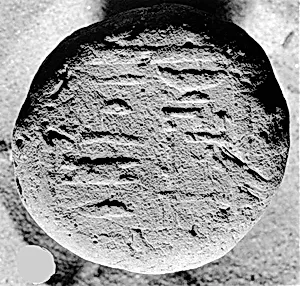
Funerary Cone of a Woman Named Seniseneb
Unknown Artist
ca. 1550–1295 B.C.
Medium
Pottery
Dimensions
Preserved L. 16.5 cm (6 1/2 in.); Diam. 8 cm (3 1/8 in.)
Classification
Cone, Seniseneb, square impression
Period
New Kingdom
Department
Egyptian Art
Museum
Metropolitan Museum of Art, New York, NY
Credit
Gift of Norman de Garis Davies, 1930
Accession Number
30.6.15
Rights
Public Domain
Tags
Art Historical Context
Step into the world of ancient Egypt with the *Funerary Cone of a Woman Seniseneb*, a poignant artifact from the New Kingdom's 18 (ca. 1550–1295 B.C.). Crafted during a golden age of pharaonic power—think towering temples and iconic rulers like Hatshepsut—this small pottery cone was designed for tomb use. Placed above entrances or in wall niches, these cones magically invoked offerings of bread, beer, and other sustenance for the deceased's eternal spirit, or *ka*, reflecting Egyptians' profound belief in the afterlife. Made of fired clay, the cone measures just 16.5 cm long and 8 cm in diameter, yet its surface bears incised hieroglyphs naming Seniseneb and likely her titles or prayers. This mass-produced yet personalized form exemplifies New Kingdom funerary art: simple, functional pottery elevated by precise inscriptions that ensured the owner's name lived forever—a key to immortality in Egyptian cosmology. Generously gifted to the Metropolitan Museum of Art in 1930 by Egyptologist Norman de Garis Davies, this cone offers a intimate glimpse into daily elite life beyond pyramids. It reminds us how even humble objects carried cosmic weight, bridging the living and the divine.