
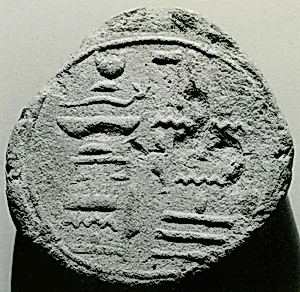
Funerary Cone of the Fourth Prophet of Amun Neferhotep
Unknown Artist
ca. 1550–1295 B.C.
Medium
Pottery
Dimensions
Preserved L. 2.5 × Diam. 8.2 cm (1 × 3 1/4 in.)
Classification
Cone, Neferotep, circular impression, fourth priest, Amenhotep, house mistress
Period
New Kingdom
Department
Egyptian Art
Museum
Metropolitan Museum of Art, New York, NY
Credit
Gift of Norman de Garis Davies, 1930
Accession Number
30.6.134
Rights
Public Domain
Tags
Art Historical Context
This modest pottery funerary cone, dating to Egypt's New Kingdom (Dynasty 18, ca. 1550–1295 B.C.), once served a poignant purpose in the afterlife rituals of the elite. Measuring just 2.5 cm long and 8.2 cm in diameter, it was likely placed in a niche above the tomb entrance of Neferhotep, the Prophet of Amun—a temple official devoted to Thebes' chief deity, Amun. These cones, mass-produced yet personalized, bore hieroglyphic inscriptions invoking passersby to offer water libations for the deceased's ka (spirit), ensuring eternal sustenance. Crafted from fired clay, the cone's simple conical shape mimicked offerings like bread loaves, symbolizing abundance in the tomb. The incised hieroglyphs, a hallmark of New Kingdom tomb architecture, highlight the era's refined scribal artistry and devotion to religious hierarchy. Neferhotep's title underscores Amun's rising prominence during this golden age of pharaonic power, when priests wielded immense influence. Today, gifted to the Metropolitan Museum of Art in 1930 by Egyptologist Norman de Garis Davies, this artifact offers a tangible glimpse into ancient Egyptian beliefs in immortality, bridging the living and the divine through everyday pottery.