
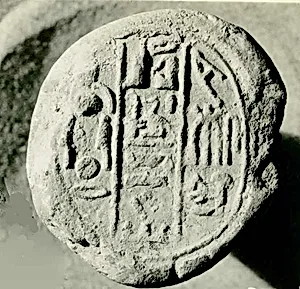
Funerary Cone of the King's Son of Kush Merymose
Unknown Artist
ca. 1550–1295 B.C.
Medium
Pottery
Dimensions
L. 16.5 cm (6 1/2 in.); Diam. 7.8 cm (3 1/16 in)
Classification
Cone, circular stamp, Merymose, Kush
Period
New Kingdom
Department
Egyptian Art
Museum
Metropolitan Museum of Art, New York, NY
Credit
Gift of Norman de Garis Davies, 1930
Accession Number
30.6.73
Rights
Public Domain
Tags
Art Historical Context
Step into the world of ancient Egypt with the *Funerary Cone of the King's Son of Kush Meryose*, a modest yet poignant artifact from the New Kingdom's 18 (ca. 1550–1295 B.C.). Crafted from, this cone—measuring 16.5 cm long and 7.8 cm in—was designed to be embedded in the facade of a tomb entrance or niche. Its primary purpose? To eternally invoke offerings of bread, beer, and other sustenance for the deceased, a clever fusion of piety and practicality in Egyptian funerary customs. Belonging to Merymose, a high-ranking official titled "King's Son of Kush," the cone reflects Egypt's expansive influence during this golden age. As viceroy of Nubia (ancient Kush), Merymose managed vital trade routes and southern frontiers under pharaohs like Thutmose III or Amenhotep III. The cone's surface bears finely incised hieroglyphs, stamped or carved before firing, proclaiming his name, titles, and ritual pleas to the gods—techniques that ensured legibility for eternity while showcasing the era's skilled potter-scribes. Housed in the Metropolitan Museum of Art's Egyptian Art department (gift of Norman de Garis Davies, 1930), this unassuming object illuminates the New Kingdom's blend of imperial power, religious devotion, and everyday artistry. Thousands of such cones once dotted Theban necropolises, making Merymose's a vivid window into elite afterlife beliefs.