
Funerary Cone of the Wab-Priest Neferkhawet
Unknown Artist
ca. 1550–1295 B.C.
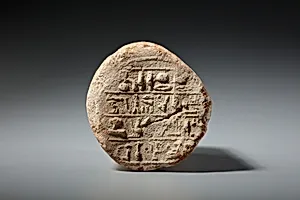
Medium
Pottery
Dimensions
H. 7.4 cm (2 15/16 in.); W. 7.3 cm (2 7.8 in.); preserved L. 9.5 cm (3 3/4 in.)
Classification
Cone, Davies 405, Neferkhawet, wab-priest, bee keeper, Amun
Period
New Kingdom
Department
Egyptian Art
Museum
Metropolitan Museum of Art, New York, NY
Credit
Rogers Fund, 1915
Accession Number
15.10.28
Rights
Public Domain
Tags
Art Historical Context
This small pottery funerary cone, to Egypt's New Kingdom (ca 1550–1295 B.C.), belonged to Neferkhawet, a wab-priest responsible for ritual purification in temple ceremonies. Measuring just 7.4 cm high and inscribed with hieroglyphs bearing his name and titles, it was designed to be embedded above a tomb entrance at Thebes. These cones served a vital funerary purpose: invoking passersby to recite offering formulas, ensuring the deceased's (ka) received eternal sustenance of bread, beer, and oxen. Crafted from fired clay during Dynasty 18—the zenith of Egypt's imperial power under pharaohs like Hatshepsut and Amenhotep III—the cone exemplifies mass-produced tomb goods for the middle class, including priests and officials. Its simple, tapered form and incised hieroglyphs reflect efficient workshop techniques, prioritizing legibility and magical efficacy over elaborate decoration. Today, housed in the Metropolitan Museum of Art (Rogers Fund, 1915), this artifact offers a poignant glimpse into ancient Egyptian beliefs in the afterlife, where even modest cones bridged the living and the dead, perpetuating memory across millennia.