
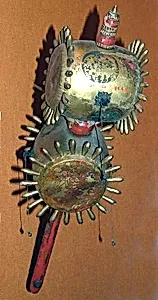
Furi Tsuzumi
Unknown Artist
19th century
Medium
Wood
Dimensions
Height: 35.6 cm (14 in.); Diam. of Cylinders: 2 1/2 in. and 3 1/4 in.
Classification
Membranophone-double-headed / cylindrical drum
Culture
Japanese
Department
Musical Instruments
Museum
Metropolitan Museum of Art, New York, NY
Credit
The Crosby Brown Collection of Musical Instruments, 1889
Accession Number
89.4.83
Rights
Public Domain
Art Historical Context
Nestled in the Metropolitan Museum of Art's renowned Crosby Brown Collection of Musical Instruments the *Furi Tsuzumi* is a captivating 19th-century Japanese double-headed cylindrical drum crafted from wood. Standing at35.6 cm (14 in.) tall with cylinder diameters of 2½ in. and 3¼ in., this membranophone exemplifies the precision of traditional Japanese craftsmanship. Its wooden construction highlights the material's acoustic resonance and durability, essential for percussion instruments that produce sharp, rhythmic tones when struck or shaken. In Japanese culture, drums like the *Furi Tsuzumi* played vital roles in rituals, festivals, and performing arts, providing pulsating beats that accompanied dances, theater, and community gatherings. The double-headed design allowed for varied sounds from each membrane, often tuned differently to create dynamic layers in ensembles. Though the artist remains unknown, this piece reflects the 19th-century Edo-to-Meiji transition, when such instruments bridged folk traditions and evolving artistic expressions. Today, it invites visitors to imagine the lively echoes of Japan's musical heritage, underscoring how everyday objects like this drum embody profound cultural narratives.