
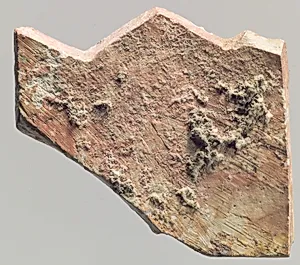
Furniture element
Unknown Artist
ca. 18th century BCE
Medium
Ivory
Dimensions
1.34 x 1.1 in. (3.4 x 2.79 cm)
Classification
Ivory/Bone-Reliefs
Culture & Period
Old Assyrian Trading Colony · Middle Bronze Age–Old Assyrian Trading Colony
Department
Ancient Near Eastern Art
Museum
Metropolitan Museum of Art, New York, NY
Credit
Gift of Mrs. George D. Pratt, in memory of George D. Pratt, 1937
Accession Number
37.143.8
Rights
Public Domain
Art Historical Context
This delicate ivory furniture element, carved around the 18th century, hails from the Old Assyrian Trading Colony culture during the Middle Bronze Age Measuring just 1.34 x 1.1 inches, it exemplifies the exquisite craftsmanship of ancient Near Eastern artisans, likely serving as an inlay or fitting for elite furniture such as tables or chairs.ated to the Metropolitan Museum of Art 1937 by Mrs. George D. Pratt, offers a glimpse into a world of sophisticated luxury goods. The Old Assyrian Trading Colonies, centered in sites like Külte (ancient Kanesh) in Anatolia, were bustling hubs of international commerce where Assyrian merchants from Mesopotamia exchanged tin, textiles, and metals for local goods. Ivory, a prized import from regions like Syria or even distant India, was reserved for high-status objects, underscoring the wealth and connectivity of these Bronze Age networks. Relief carving on such a tiny scale demanded remarkable skill, with incised details capturing motifs typical of the era—though specifics here remain tantalizingly elusive. As a relic of early globalization, this piece highlights how art and trade intertwined, adorning the homes of prosperous traders and revealing the cultural exchanges that shaped the ancient Near East. Visitors, imagine it gleaming on a merchant's table amid cuneiform ledgers!