
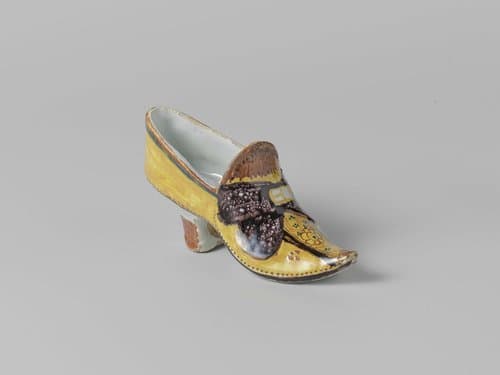
Gele schoen met paarse strik van faïence
c. 1750 - c. 1775
Medium
shoe
Dimensions
12.5; 4.5; 6
Rights
Public Domain
About this artwork
verzamelaarsmerk, onderkant object, geplakt: ‘mare nascitur fortitudo / ex museo de la villestreux’
Art Historical Context
Step into the whimsical world of 18th-century European ceramics with *Gele schoen met paarse strik van faïence* (Yellow Shoe with Purple Bow of Faience), an anonymous creation dating to around 1750–1775. This delightful miniature shoe, measuring just 4.5 cm high, 12.5 cm wide, and 6 cm deep, is crafted from faience—a tin-glazed earthenware prized for its vibrant colors and glossy finish. Its sunny yellow body topped with a striking purple bow captures the playful Rococo spirit of the era, when decorative objects blended everyday motifs with artistic flair. Faience, popular in the Netherlands and France during this period, offered an accessible alternative to expensive Chinese porcelain, allowing artisans to experiment with bold glazes and intricate shapes. This tiny shoe likely served as a charming ornament, curiosity, or even a collector's trinket, reflecting mid-18th-century fashion trends like ornate buckles and bows on ladies' footwear. Its diminutive scale suggests it was never meant for wear, but rather to evoke delight in a cabinet of wonders. A glued collector's mark on the underside reads “mare nascitur fortitudo / ex museo de la villestreux,” hinting at its provenance from the esteemed collection of de la Villestreux. This Latin motto—“strength is born from the sea”—adds a layer of mystery, perhaps alluding to the object's resilient material or the collector's personal emblem. A true gem for lovers of quirky antiques!
About the Artist
anonymous
In the vast tapestry of art history, "Anonymous" stands not as a singular individual but as a collective designation for countless unidentified creators whose works have endured across millennia. These artists, spanning prehistoric cave painters to medieval illuminators and folk craftsmen, produced the foundational layers of human visual culture. Prior to the Renaissance, when individual fame emer...